









IRELAND’S EDUCATION SYSTEM
Tuesday - 16/12/2025
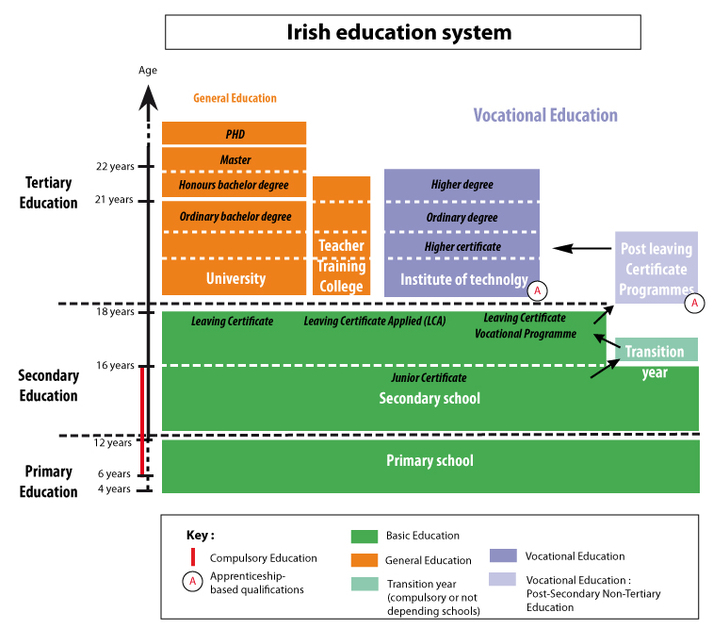
Education is compulsory for children in Ireland from ages 6 to 16, or until they have completed 3 years of secondary education. Ireland’s school system differs significantly from that of Vietnam and is divided into two main levels: Primary and Secondary.
I. Primary & Secondary Education
1. Early Childhood Education
Early childhood education (ages 4-6) is not compulsory in Ireland. However, around 40% of children aged 4-5 attend this level.
2. Primary Education
Primary education (ages 6-12) runs from 1st to 6th class. There are more than 3,000 primary schools, including:
- Government-funded schools;
- Special schools for children with disabilities;
- Private schools;
- Catholic schools.
Most local families choose government-funded schools. However, there are still a number of schools in Ireland that accept international students at this age.
3. Secondary Education
Secondary school in Ireland begins at age 12 or 13 and consists of two cycles:
- Junior Cycle – 3 years (ages 12-15);
- Senior Cycle – 2-3 years (ages 15-18): includes an optional Transition Year (TY). During TY, students do not sit formal state exams and may participate in various experiential learning opportunities, including work placements.
There are two major examinations Irish students must take during secondary education:
- Junior Certificate (Junior Cert) – taken at the end of the 3rd year (age 14-15). Results are issued at the beginning of 4th year (for students who choose to sit the exam that year), or students may sit the exam in 5th year (age 16-17);
- Leaving Certificate (Leaving Cert) – taken at the end of 6th year. Students must achieve a minimum number of points to qualify for admission to their chosen university programs.
Grading System in Ireland:
| Irish Grade | Numeric Range |
| H1 | 90-100 |
| H2 | 80-89 |
| H3 | 70-79 |
| H4 | 60-69 |
| H5 | 50-59 |
| H6 | 40-49 |
| H7 | 30-39 |
| H8 | 0-29 |
For more detailed information on secondary education in Ireland, click here.
II. Higher Education (Third-level Education)
With 32 higher education institutions, Ireland offers more than 5,000 academic programs across a wide range of fields, with qualifications that are fully assured and globally recognized. Whether you aim to study at a university strong in business administration, science and technology, or the arts and humanities, you will find excellent options in Ireland.
Programs are continuously updated and designed to combine academic theory with applied skills and essential soft skills such as independent analytical thinking, creativity, teamwork, and strong academic support from lecturers and staff. As a result, graduates from Ireland have become innovators and leaders in their fields. “The most important reason we come to Ireland is because of the skill and capability of the workforce,” said Sheryl Sandberg, Chief Operating Officer of Facebook.
1. Academic intakes: September & January
- Semester 1: September – December;
- Winter break (1 month): December – January;
- Semester 2: Late January – May;
- Summer break: May – early September.
2. Types of academic programs
Non-degree programs:
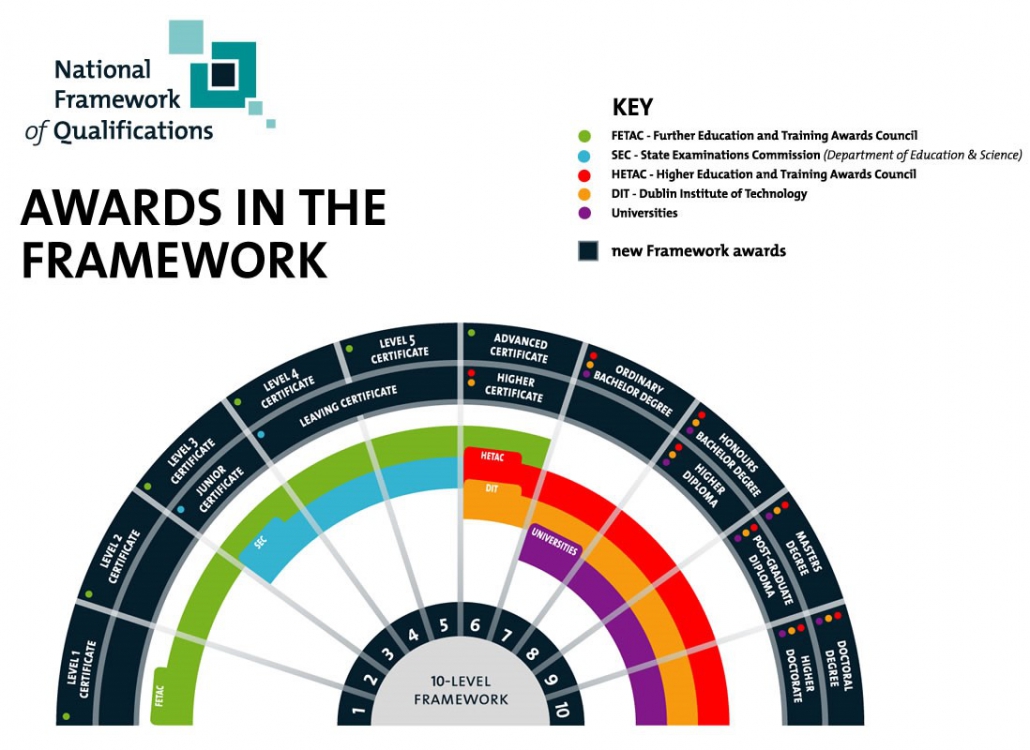
- Level 6 Higher Certificate: typically 2 years. Students may receive exemptions of 1 or 2 years when progressing to a Bachelor’s program;
- Level 8 Higher Diploma: typically 1 year;
- Level 8 Graduate Diploma: typically 1 year;
- Level 9 Postgraduate Diploma: typically 1-2 years.
Degree programs:
- Level 7 Bachelor’s Degree: typically 3 years (Programs such as Medicine, Veterinary Science, Dentistry, and Architecture usually take 5-6 years.);
- Level 8 Honours Bachelor’s Degree: typically 3-4 years;
- Level 9 Master’s Degree: typically 1-2 years (The 1-year Master’s programs are currently very popular among international students due to shorter study duration and eligibility for a 2-year post-study work visa.);
- Level 10 Doctoral Degree (PhD) or Post-Doctoral Degree: usually at least 3 years, including a dissertation.
See more about Irish universities at the link here.
For tailored guidance and full assistance throughout your study-abroad journey, please contact us HERE:
Duc Anh EduConnect
Hotline: 09887 09698, 09630 49860
Email: duhoc@ducanh.edu.vn
Website: ducanhduhoc.vn/