









CANADIAN COLLEGES AND INSTITUTIONS
Thứ Ba - 02/12/2025
Reference: List of Public Colleges in Canada
Programs offered at Canadian colleges are typically highly practical and hands-on, with a stronger vocational focus compared to university programs. For this reason, many students who have already completed a university degree return to college to gain additional professional skills. College classes usually have smaller class sizes, offer external internships, provide spacious classrooms and laboratories, encourage interactive teaching methods, and offer multiple levels of entry across a wide range of disciplines – from technical fields to creative arts.
Canadian colleges provide multidisciplinary training in fields such as business, information technology, mining, environmental studies, hospitality and tourism, healthcare, business administration, academic upgrading, applied arts, and social services. Students may choose full-time or part-time study; however, international students must study full-time. These institutions aim to meet the training needs of business, industry, and the public service sector, while also providing education for high school graduates seeking career-oriented programs, university graduates seeking employment skills, and adults engaged in continuing education.
There are 175 post-secondary institutions that are members of Colleges and Institutes Canada (CICan). These colleges are known by various names, including community colleges, technical institutes, university colleges, and cégeps, etc.
University Colleges: As the name suggests, university colleges combine characteristics of both colleges and universities. Students can choose one of two pathways: complete two years of academic studies and then transfer to a university, or study for two to three years and graduate with a specialized diploma. These institutions often collaborate with regional universities to enable seamless credit transfer. Students typically need just an additional two years of study at a university to complete a four-year bachelor’s degree.
Community Colleges: Community colleges are the most common type of post-secondary institution in Canada. They offer specialized vocational programs lasting one to three years, including internship components. Some community colleges also offer university transfer programs, allowing students to complete courses equivalent to the first two years of a four-year bachelor’s degree. Students then transfer to a university to complete the final two years of their degree.
Technical Institutes/Career Colleges: Technical Institutes are private educational institutions that provide short and medium term training programs designed to equip learners with practical, job-ready skills. Programs may include film production, information technology, internet systems, graphic design, hospitality and tourism, and more. Although privately operated, these institutions must comply with provincial educational regulations, ensuring high standards in curriculum design and instructional quality.
Students may transfer from community colleges or other colleges into university degree programs. However, it is essential to check important details in advance, such as: Which credits are accepted by the university? How many additional credits or courses will be required? If you plan to pursue this pathway, you should verify transfer information before beginning college studies. This will help you understand your academic pathway and prepare effectively for transfer to a university program.
In Québec, international students may attend a cégep (Collège d’enseignement général et professionnel) before transferring to university. For high school graduates, cégeps offer two types of programs: Two-year pre-university programs, which lead directly to university admission and Three-year technical programs, which prepare students to enter the workforce.
For tailored guidance and full assistance throughout your study-abroad journey, please contact:
Duc Anh EduConnect
Hotline: 09887 09698
Email: duhoc@ducanh.edu.vn
Website: www.ducanhduhoc.vn
Bài viết liên quan

Du học Malaysia: PACIFIC UNIVERSITY OF TECHNOLOGY & INOVATION
Trường đại học Công nghệ hàng đầu Malaysia www.apu.edu.my ***** Malaysia đang khẳng định vị thế là điểm đến giáo dục hàng đầu Đông Nam Á, với hơn 130.000 sinh…

Du học Malaysia: Ở LẠI LÀM VIỆC 12 THÁNG NGAY SAU KHI TỐT NGHIỆP
2025 là năm đầu tiên chính phủ Malaysia cho phép du học sinh (DHS) ở lại làm việc trong 12 tháng và nhiều du học sinh của chúng tôi rất…

Du học Malaysia: Tại Universiti Kebangsaan Malaysia – No. 126 trên toàn cầu.
Từ những năm 2000, nhiều sinh viên Việt Nam đã chọn du học Malaysia, ở lại làm việc tại Malaysia và những năm 2024 – 2025 khi phụ huynh cần…
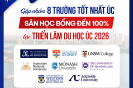
Gặp nhóm 8 trường tốt nhất nước Úc & check học bổng đến 100% học phí TẠI TRIỂN LÃM DU HỌC ÚC 2026
Thực tế thì cứ 3 ứng viên quan tâm du học Úc thì 2 người nhắm Go8- Nhóm 8 trường Đại học hàng đầu nước Úc. Thế nên, Triển lãm…
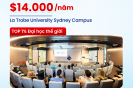
Chọn La Trobe Sydney hay La Trobe Melbourne? CẢ HAI ĐỀU CÓ HỌC BỔNG KHỦNG
Mọi người thường chỉ biết đến La Trobe University (LTU) tại Melbourne campus, ít ai biết rằng LTU còn có Sydney campus. Thế nên bài này tụi mình nói nhiều…

Cập nhật chính sách du học- học bổng- visa & việc làm & định cư Úc TẠI TRIỂN LÃM DU HỌC ÚC 2026
Không ít phụ huynh- học sinh lo lắng khi nói đến du học Úc. THỰC TẾ là du học sinh công ty Đức Anh: 99% DHS vào đúng được trường…