









INFORMATION ABOUT AUCKLAND UNIVERSITY OF TECHNOLOGY (AUT), NEW ZEALAND
Thứ Tư - 31/12/2025
1. Parents and students are advised to check the most up-to-date information on the official University website: https://www.aut.ac.nz/
2 Location – Three campuses in Auckland City:
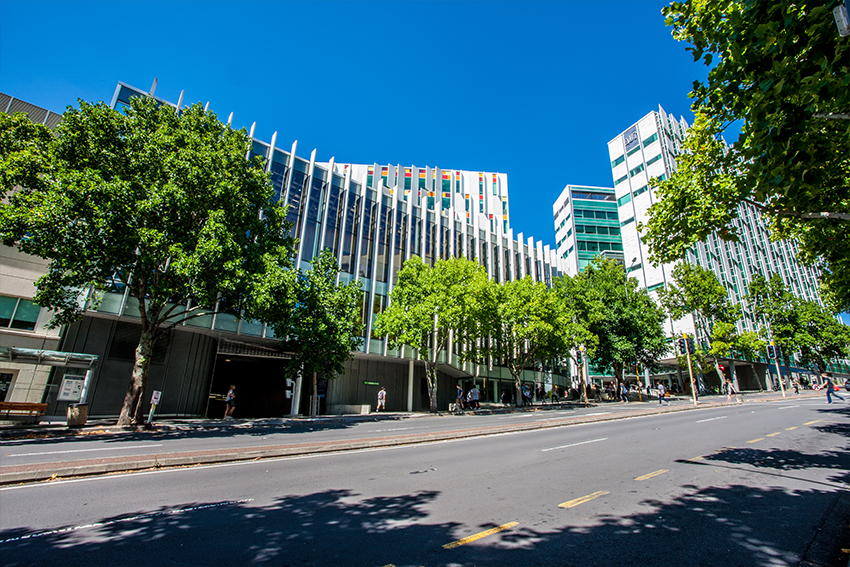
- AUT City Campus: Located in the heart of Auckland City, approximately 25 minutes’ drive from Auckland International Airport;
- Manukau Campus (AUT South Campus): Located in the southern area of Auckland City, approximately 15 minutes’ drive from Auckland International Airport;
- North Shore Campus (across the Auckland Harbour Bridge): Located in the northern part of Auckland City, approximately 30 minutes’ drive from Auckland International Airport.
3. Institution Type: Public university
4. Rankings & Quality Accreditation:
- Ranked 412 globally (QS World University Rankings 2026);
- Ranked 8 in New Zealand (QS Rankings 2026);
- Auckland University of Technology rankings: https://www.aut.ac.nz/about/rankings-and-accreditation
5. Total Student Population: > 29,000 students
6. International Students: > 5,400 students
7. Key Strengths:
- Graduate employability: 96% of graduates are in paid employment within six months of graduation;
- Student satisfaction: 87% of students are satisfied with campus facilities, 84% are satisfied with teaching quality, and 89% of alumni would recommend AUT to others (QS 2017);
- Work-integrated learning: 92% of undergraduate programs require students to complete a work placement prior to graduation;
- Innovative teaching approach: AUT has an excellent reputation for its innovative teaching methods, strong industry focus, and emphasis on practical experience and work-integrated learning. AUT graduates are highly regarded by employers;
- Program rankings: 11 subject areas at AUT are ranked among the best in the world, including Hospitality and Tourism (Top 50), Art and Design (Top 100), and Accounting and Finance (Top 150);
- Location advantages: AUT is the second-largest university in New Zealand, located in Auckland – one of the country’s largest and most dynamic cities. Auckland enjoys a mild climate and stunning natural scenery, with beautiful beaches, mountain ranges, and ski fields nearby. The city is ranked among the Top 10 most liveable cities in the world (EIU Global Liveability Index 2024).
8. Academic Programs:
a. Levels of Study: https://www.aut.ac.nz/international/study-options-for-international-students
- English Language Programs (delivered at AUT International House – see details);
- Foundation Programs (delivered at Taylors College – see details);
- Bachelor’s Degrees;
- Postgraduate / Master’s Programs;
- Doctoral Degrees (PhD).
b. Faculties: www.aut.ac.nz/about/faculties-and-schools
FACULTY OF BUSINESS, ECONOMICS AND LAW/ TE ARA PAKIHI, TE ŌHANGA ME TE TURE
- Business School/ Te Kura Kaipakihi
- Law School/ Te Kura Ture
- School of Economics/ Matauranga Ōhanga
FACULTY OF CULTURE AND SOCIETY/ TE ARA KETE ARONUI
- School of Education/ Te Kura Mātauranga
- School of Hospitality and Tourism/ Te Kura Taurimatanga me te Mahi Tāpoi
- School of Language and Culture/ Te Kura Reo me te Ahurea
- School of Social Sciences and Public Policy/ Te Kura Pūtaiao ā-iwi me ngā Kaupapa Tūmatanui
FACULTY OF DESIGN AND CREATIVE TECHNOLOGIES/ TE ARA AUAHA
- School of Art and Design/ Te Kura Toi a Hoahoa
- School of Communication Studies/ Te Kura Whakapāho
- School of Engineering, Computer and Mathematical Sciences/ Te Kura Mātai Pūhanga, Rorohiko, Pāngarau
- Creative Technologies/ Marautanga Matatini
FACULTY OF HEALTH AND ENVIRONMENTAL SCIENCES/ TE ARA HAUORA A PŪTAIAO
- School of Clinical Sciences/ Te Kura Mātai Haumanu
- School of Interprofessional Health Studies/ Te Kura Pākeho Ngaiotanga o Ngā Marau Akoranga Hauora
- School of Public Health and Psychosocial Studies/ Te Kura Hauora Tūmatanui
- School of Science/ Te Kura Pūtaiao
- School of Sport and Recreation/ Te Kura Hākinakina
TE ARA POUTAMA/ FACULTY OF MĀORI AND INDIGENOUS DEVELOPMENT
c. Fields of Study:
View details: www.aut.ac.nz/study/study-options
- Architecture
- Art and design
- Business and economics
- Colab: creative technologies
- Communication studies
- Education
- Engineering, computer and mathematical sciences
- Health sciences
- Hospitality, tourism and events
- Language and culture
- Law
- Science
- Social sciences and public policy
- Sport and recreation
- Te Ara Poutama: Māori and indigenous development
- Postgraduate courses
9. Entry Requirements:
Further details: https://www.aut.ac.nz/study/applying/entry-requirements
- Foundation Programs:
- Pre-Foundation Program: High school graduation; IELTS 4.5;
- Standard Program: High school graduation; IELTS 5.0;
- Intensive Program: High school graduation; IELTS 5.5 (no band below 5.0).
- Undergraduate Programs: High school graduation with GPA ≥ 8.0 (from the list of recognized Vietnamese high schools); IELTS 6.0 (no band below 5.5); or completion of the first year at a university with good academic results; or completion of a foundation program.
- Postgraduate / Master’s Programs: Bachelor’s degree in a related field with good academic results; IELTS 6.5 (no band below 6.0); accompanied by a detailed research proposal.
- Doctoral Programs (PhD): Master’s degree in a related field with good academic results; IELTS 6.5 (no band below 6.0); accompanied by a detailed research proposal.
10. Intakes:
- English Language Programs: April, July, September, and November;
- Foundation Programs:
- Pre-Foundation Program: January, July;
- Standard Program: January, July, August;
- Intensive Program: April, October.
- Undergraduate / Postgraduate / Master’s / Doctoral Programs: February and July.
11. Application Documents:
General requirements:
- Certificate of the highest completed qualification;
- Academic transcripts of the most recent two years;
- English language certificate (if available);
- Passport (photo and signature page), if available;
- Academic achievements and other accomplishments (required for scholarship applications).
Additional documents for Master’s programs:
- Curriculum Vitae (CV);
- Two (02) Letters of Recommendation.
Additional documents for Research Master’s / PhD programs:
- Research proposal;
- Published academic papers (if any).
12. Tuition Fees:
Detailed tuition fees: https://www.aut.ac.nz/study/fees-and-scholarships/fees-to-study-at-aut/tuition-fees-at-aut
- English Language Programs: NZD 4,745 per 3 months;
- Foundation Programs: NZD 13,000 – 27,000 per program;
- Undergraduate Programs: NZD 27,000 – 38,000 per year;
- Postgraduate / Master’s / Doctoral Programs: NZD 31,000 – 53,000 per year.
13. Living Expenses: NZD 10,000 – 15,000 per year
14. Scholarships: NZD 8,000 – 10,000 – 20,000 – 25,000. Further details: https://www.aut.ac.nz/study/fees-and-scholarships
15. Accommodation and Other Services: Students may choose homestay, on-campus accommodation, shared housing (for students aged 18 and above), or live with relatives. Detailed accommodation information is available at: https://www.aut.ac.nz/student-life/accommodation
16. Support from Duc Anh EduConnect:
Duc Anh is one of the few officially authorised representatives in Vietnam providing comprehensive support for international students, including:
- Consulting on school and programme selection – students are only referred to institutions with high academic quality;
- Application submission and maximising scholarship opportunities (subject to eligibility);
- English training and official PTE Academic test organisation (ducanh.edu.vn/) as an alternative to IELTS/TOEFL for faster and more flexible study abroad preparation;
- Student visa application and continuous support throughout the study period;
- Career consultation for global employment opportunities, especially in Australia, the USA, Canada and the UK (subject to new policy drafts);
- Accommodation arrangements suitable for students;
- Advice on part-time work up to 20 hours/week while studying;
- Guidance on post-study work opportunities (1–3 years);
- Information and consultation on permanent residency pathways when students become eligible.
For tailored guidance and full assistance throughout your study-abroad journey, please contact us HERE:
Duc Anh EduConnect
Hotline: 09887 09698
Email: duhoc@ducanh.edu.vn
Website: www.ducanhduhoc.vn
Bài viết liên quan

Tặng vé máy bay khi du học tại HTMi – Thụy Sỹ
Học phí rẻ, được tặng vé máy bay, học tập và ở ngay tại khi resort 3 sao, lương thực tập >=USD 2,500/ tháng, có việc làm ngay sau khi tốt nghiệp…đó là các lợi thế khi bạn du học ngành quản trị du lịch- khách sạn tại Hotel and Tourim Management Institute – HTMi, Thụy Sỹ
Kỳ 3: Nghề Điện lạnh: Không chỉ HOT trong mùa hè
Đời sống của người dân ngày càng được nâng cao thì việc sử dụng các thiết bị điện lạnh như tủ lạnh, điều hoà nhiệt độ, … càng trở nên phổ biến. Nhu cầu sử dụng các thiết bị này thường tăng mạnh vào mùa hè, vì vậy đây được coi là mùa cao điểm đối với các kỹ thuật viên điện lạnh.
Kỳ 2: Ngành Điện Tự động – Thu nhập cao, nhiều việc làm?
Cỏ trong vườn được tự động cung cấp độ ẩm, hệ thống điện tự ngắt, thang máy tự lên xuống, cửa tự động mở… khi đó, nhân lực trong ngành Điện – Tự động hoá sẽ còn “đắt giá” hơn nữa. Như nhận xét của TS. Nguyễn Hữu Dũng – Viện trưởng Viện Khoa học lao động và xã hội: “Tự động hóa là 1 trong 5 lĩnh vực nghề “hot” nhất, có nhu cầu tuyển dụng lớn nhất hiện tại và tương lai gần”.
Kỳ 1: Khát nhân lực ngành Điện – Điện tử
Bạn có thể dễ dàng tìm kiếm các chương trình học bổng ngành Điện – Điện tử tại Úc, cả ở những trường danh tiếng lâu đời thuộc Group of 8 như: ĐH Monash, ĐH Melbourne, ĐH New South Wales… đến những trường ĐH trẻ, năng động như: RMIT, UTS, Charled Darwin Uni, James Cook Uni, Victoria Uni
Kỳ 2: Đào tạo ngành cơ khí tại Việt Nam và nước ngoài
Có thể nói kỹ sư cơ khí là một trong số những người lao động được trang bị tốt nhất trên thế giới cả về kiến thức và kỹ năng. Để làm tốt công việc trong lĩnh vực cơ khí, bạn cần có niềm đam mê, tính cẩn thận, chính xác, kiên trì, có tư duy phân tích nhạy bén, logic…
Kỳ 1: Nghề Cơ khí – Chọn 1 nghề làm nhiều ngành
Suy thoái kinh tế đã làm thay đổi tương đối cái nhìn của xã hội về giá trị nghề nghiệp. Không ít những ngành nghề “hot” bị “rớt giá” thảm hại, trong khi một số nghề vẫn giữ được phong độ. Cũng có những nghề trở nên có giá hơn nhờ khủng hoảng và cơ khí là một trong số đó