









INFORMATION ABOUT AUSTRALIAN NATIONAL UNIVERSITY (ANU)
Thứ Ba - 30/12/2025
1. Parents and students are kindly advised to check the most up-to-date information on the university’s official website:
2. Location:
- Acton Campus: Located in the heart of Australia’s capital, Canberra; comprises 60 academic buildings/complexes, close to major political and cultural institutions such as the Australian Parliament House;
- Kioloa Coastal Campus: Covers more than 300 hectares in New South Wales; approximately 1 hour’s drive from Canberra and 2.5 hours from Sydney;
- Mount Stromlo Observatory: A space and astrophysics research centre, located 18 km from Canberra;
- North Australian Research Unit: A research facility in Northern Australia, located 15 km from Darwin city, 8 km from Darwin International Airport, at 23 Ellengowan Drive, and with access connections to Melbourne Airport;
- Siding Spring Observatory (SSO): The largest astronomical observatory managed by ANU.
3. Type of Institution: Public university
4. Rankings – Quality Assurance:
- Ranked 32nd globally (QS World University Rankings 2026)
- Ranked 4th in Australia (THE World University Rankings 2025)
- ANU University Rankings:
https://reporter.anu.edu.au/all-stories/anu-32nd-in-world-university-rankings
5. Total Student Population: > 31,000 students
6. International Students: > 10,000 students
7. Strengths:
- Ranked 4th in Australia and 30th globally (QS World University Rankings 2025);
- The only university established by an Act of the Australian Parliament, serving as Australia’s National University;
- A member of the Group of Eight (Go8) – Australia’s leading research-intensive universities;
- The only Australian member of the International Alliance of Research Universities (IARU);
- #1 in Australia and #20 globally for graduate employability within four months of graduation (Times Higher Education, 2021);
- 91% of academic staff hold PhD degrees or higher; ANU has produced 6 Nobel laureates, including a Vice-Chancellor who received the 2011 Nobel Prize in Physics, and two former Prime Ministers of Australia are ANU alumni;
- 96% of ANU’s research is rated above or well above world standards;
- Awarded 5 stars for student-staff ratio; small class sizes enhance student engagement and interaction;
- Maintains strong links with government agencies and leading corporations;
- Offers student exchange opportunities with more than 180 partner universities across 39 countries;
- Equipped with state-of-the-art facilities for teaching and research, including the most powerful computer in the Southern Hemisphere, astronomical telescopes, the world’s largest solar thermal concentrator at ANU, and advanced space technology research and development facilities, among many others;
- Renowned for excellence in fields such as Engineering (Mechanical Engineering), Information Technology, Natural Sciences, Sociology, Economics, Commerce, and Law;
- Location: Situated in the centre of Canberra, Australia’s capital city-approximately 300 km from Sydney and 650 km from Melbourne. Canberra was purpose-built in 1913 with a clear urban plan. It is a student-friendly city, often ranked among the world’s most liveable cities and within the Top 25 global cities for students. As the seat of the Australian Government and host to numerous international embassies and consulates, Canberra offers a distinctly international lifestyle. The city boasts the highest average income and the lowest unemployment rate in Australia;
- Students are permitted to work up to 48 hours per fortnight during the academic term and full-time during official breaks and holidays;
- Post-study work visas are extended by an additional year, allowing graduates to remain in Australia for 4-6 years after graduation and pursue permanent residency, subject to eligibility.
8. Academic Programmes
a. Levels of Study: https://programsandcourses.anu.edu.au/
- Bachelor’s degrees
- Master’s degrees
- Doctoral (PhD) degrees
b. Academic Colleges: View details at: https://www.anu.edu.au/about/academic-colleges
The University comprises 7 academic colleges:
ANU College of Arts & Social Sciences
- Research School of Humanities & the Arts
- Research School of Social Sciences
ANU College of Asia & the Pacific
- Australian Centre on China in the World
- Crawford School of Public Policy
- Coral Bell School of Asia Pacific Affairs
- School of Culture, History & Language
- School of Regulation and Global Governance (RegNet)
ANU College of Business & Economics
- Research School of Accounting
- Research School of Economics
- Research School of Finance, Actuarial Studies & Statistics
- Research School of ManagementBusiness and Economics
ANU College of Engineering & Computer Science
- School of Computing
- School of Cybernetics
- School of EngineeringEducation
ANU College of Health & Medicine
- ANU Medical School
- John Curtin School of Medical Research
- National Centre for Epidemiology and Population Health
- Research School of Psychology
ANU College of Law
- ANU Law School
- ANU School of Legal Practice
ANU College of Science
- Australian National Centre for the Public Awareness of Science
- Fenner School of Environment & Society
- Mathematical Sciences Institute
- Research School of Astronomy & Astrophysics
- Research School of Biology
- Research School of Chemistry
- Research School of Earth Sciences
- Research School of Physics
Other Affiliated Institutes
- Gender Institute
- Global Institute for Women’s Leadership
c. Fields of Study
For more information on academic programmes, please visit: https://programsandcourses.anu.edu.au/catalogue
Students have a wide range of study pathway options, including:
- Double Bachelor’s degree programmes
- Double Master’s degree programmes
Undergraduate
Postgraduate
Research
9. Entry Requirements
https://study.anu.edu.au/apply/international-applications
Bachelor’s Programmes
- A Level / IB students: Applications are accepted with predicted grades that are 3 points higher than the IB requirement and 1 grade higher than the A Level requirement (Applicable to the July intake only)
- US High School students: High school diploma plus SAT or ACT scores
- Canadian High School students
- Vietnamese High School graduates: Graduated from 92 specialised and top-performing high schools, with Grade 12 GPA ≥ 8.5 and IELTS ≥ 6.5 (no band below 6.0), subject to the chosen major
- Graduates from other Vietnamese high schools (outside the list of 92 specialised/top schools) or international/bilingual schools, plus SAT or ACT scores
Conversion scale from Grade 12 GPA to ATAR
| Year 12 GPA | ANU ATAR Equivalent |
| 8.5 | 82 |
| 8.6 | 84 |
| 8.7 | 86 |
| 8.8 | 88 |
| 8.9 | 90 |
| 9.0 | 92 |
| 9.1 | 94 |
| 9.2 | 96 |
| 9.3 | 98 |
| 9.4 | 98.5 |
| 9.5 | 99 |
| 9.6 | 99.5 |
| 9.7 and above | 99.95 |
- Coursework Master’s programmes: Bachelor’s degree completed; IELTS ≥ 6.5-7.0, depending on the field of study;
- Research Master’s / PhD programmes: Bachelor’s degree (Honours) or Master’s degree completed; final-year GPA ≥ 75%, completion of a research project, and IELTS ≥ 7.0 (no individual band below 6.0).
10. Intakes: February, July
www.anu.edu.au/directories/university-calendar
11. Application Documents
All documents must be officially translated (judicial translation) or translated by translation agencies/service providers officially recognised by ANU.
- List of recognised agencies in Hanoi: view here
- List of recognised agencies in Ho Chi Minh City: view here
General documents:
- Certificate/Diploma of the highest level of education completed;
- Academic transcripts for the most recent two years;
- English language certificate (if available);
- Passport (photo and signature page), if available;
- Academic achievements and extracurricular activities (required if applying for scholarships).
For Master’s programmes – additional requirements:
- Curriculum Vitae (CV);
- Two (02) letters of recommendation.
For PhD / Research Master’s programmes – additional requirements:
- Research proposal;
- Published academic papers (if any).
12. Tuition Fees
For more details, please refer to:
- Tuition fees 2025: view here
Undergraduate / Postgraduate programmes: AUD 44,670 – 59,750 per year
13. Living Expenses
Compared to Melbourne and Sydney, Canberra has a lower cost of living, estimated at approximately AUD 25,446 per year. For detailed guidance, please refer to the university’s official information:
https://www.anu.edu.au/students/program-administration/fees-payments/cost-of-living
14. Scholarships
For details, please visit: www.anu.edu.au/study/scholarships/find-a-scholarship
- 25% tuition fee scholarship for Bachelor’s and Master’s programmes – unlimited number of awards;
- Faculty-based scholarships: www.anu.edu.au/study/scholarships/find-a-scholarship
15. Accommodation
Students may choose from homestay, on-campus residence halls, shared accommodation (for students aged 18 and above), or living with relatives. ANU offers an extensive on-campus accommodation system with over 5,756 rooms, providing students with a wide range of options. For detailed information on accommodation, please visit: https://study.anu.edu.au/accommodation
16. Support from Duc Anh EduConnect – Official ANU Representative
As one of the very few authorised representatives of ANU in Vietnam, we provide comprehensive support, including:
- Helping you eliminate all concerns related to documentation, applications, and procedures;
- NO administrative fees, NO service fees, NO translation fees, plus a USD 200 gift voucher (terms and conditions apply);
- Offering the best possible options in terms of universities, majors, and scholarships;
- As a TOP PERFORMING AGENT, we are committed to delivering professional and effective services;
- Maintaining one of the highest visa success rates in Vietnam;
- Supporting you throughout your study and work journey abroad.
99.9% of former students are satisfied with the services of DUC ANH EduConnect.
If you aim for success, we are ready to support you!
For tailored guidance and full assistance throughout your study-abroad journey, please contact us HERE:
Duc Anh EduConnect
Hotline: 09887 09698
Email: duhoc@ducanh.edu.vn
Website: www.ducanhduhoc.vn
Bài viết liên quan

Sở hữu bằng đại học Group of Eight với chi phí dễ chịu hơn bạn nghĩ
Không cần phải đánh đổi chất lượng giáo dục để tiết kiệm ngân sách, bạn hoàn toàn có thể sở hữu tấm bằng đại học Top 100 toàn cầu tại…
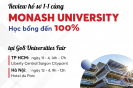
Review hồ sơ 1-1 cùng Monash University: tối ưu cơ hội nhập học và học bổng đến 100%
Tại Go8 Universities Fair, bạn sẽ được tư vấn chuyên sâu trực tiếp bởi đại diện Monash University và Đức Anh EduConnect – công ty tư vấn du học đã…
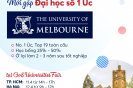
Mời gặp Đại học số 1 Úc – University of Melbourne: check học bổng 25 – 50%
Đây là cơ hội hiếm có để học sinh, sinh viên và phụ huynh được tư vấn chuyên sâu 1-1, định hướng ngành học, apply học bổng 25 – 50%…

Đón đầu học bổng đến 100% từ Đại học Sydney – “Harvard của Úc”
Đại học Sydney – Top 25 thế giới sẽ có mặt tại Việt Nam! Đừng bỏ lỡ cơ hội gặp trực tiếp đại diện trường, tư vấn 1-1, xét hồ…

Nhận visa du học vào 29 Tết: Hành trình không bằng phẳng & Chuyện bây giờ mới kể
Hành trình du học không phải lúc nào cũng là suôn sẻ. Với không ít bạn trẻ, khó khăn ban đầu đôi khi là rào cản tâm lý rất lớn….
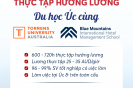
Học bổng 10% – 50% + Thực tập hưởng lương tại Úc cùng Torrens University & Blue Mountains International Hotel Management School
Torrens University – đại học trẻ phát triển nhanh nhất tại Úc – và BMIHMS – Top 3 đào tạo Quản trị Du lịch – Khách sạn tại châu Đại…