









IRELAND’S EDUCATION SYSTEM
Thứ Ba - 16/12/2025
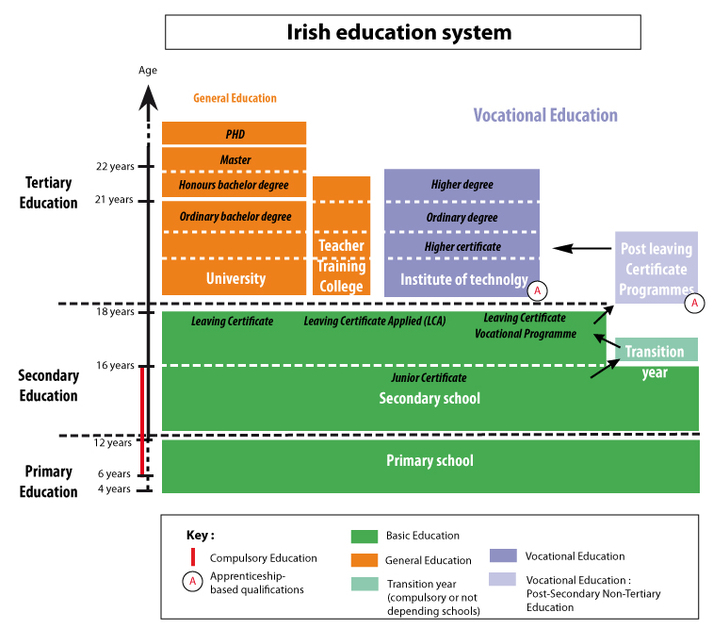
Education is compulsory for children in Ireland from ages 6 to 16, or until they have completed 3 years of secondary education. Ireland’s school system differs significantly from that of Vietnam and is divided into two main levels: Primary and Secondary.
I. Primary & Secondary Education
1. Early Childhood Education
Early childhood education (ages 4-6) is not compulsory in Ireland. However, around 40% of children aged 4-5 attend this level.
2. Primary Education
Primary education (ages 6-12) runs from 1st to 6th class. There are more than 3,000 primary schools, including:
- Government-funded schools;
- Special schools for children with disabilities;
- Private schools;
- Catholic schools.
Most local families choose government-funded schools. However, there are still a number of schools in Ireland that accept international students at this age.
3. Secondary Education
Secondary school in Ireland begins at age 12 or 13 and consists of two cycles:
- Junior Cycle – 3 years (ages 12-15);
- Senior Cycle – 2-3 years (ages 15-18): includes an optional Transition Year (TY). During TY, students do not sit formal state exams and may participate in various experiential learning opportunities, including work placements.
There are two major examinations Irish students must take during secondary education:
- Junior Certificate (Junior Cert) – taken at the end of the 3rd year (age 14-15). Results are issued at the beginning of 4th year (for students who choose to sit the exam that year), or students may sit the exam in 5th year (age 16-17);
- Leaving Certificate (Leaving Cert) – taken at the end of 6th year. Students must achieve a minimum number of points to qualify for admission to their chosen university programs.
Grading System in Ireland:
| Irish Grade | Numeric Range |
| H1 | 90-100 |
| H2 | 80-89 |
| H3 | 70-79 |
| H4 | 60-69 |
| H5 | 50-59 |
| H6 | 40-49 |
| H7 | 30-39 |
| H8 | 0-29 |
For more detailed information on secondary education in Ireland, click here.
II. Higher Education (Third-level Education)
With 32 higher education institutions, Ireland offers more than 5,000 academic programs across a wide range of fields, with qualifications that are fully assured and globally recognized. Whether you aim to study at a university strong in business administration, science and technology, or the arts and humanities, you will find excellent options in Ireland.
Programs are continuously updated and designed to combine academic theory with applied skills and essential soft skills such as independent analytical thinking, creativity, teamwork, and strong academic support from lecturers and staff. As a result, graduates from Ireland have become innovators and leaders in their fields. “The most important reason we come to Ireland is because of the skill and capability of the workforce,” said Sheryl Sandberg, Chief Operating Officer of Facebook.
1. Academic intakes: September & January
- Semester 1: September – December;
- Winter break (1 month): December – January;
- Semester 2: Late January – May;
- Summer break: May – early September.
2. Types of academic programs
Non-degree programs:
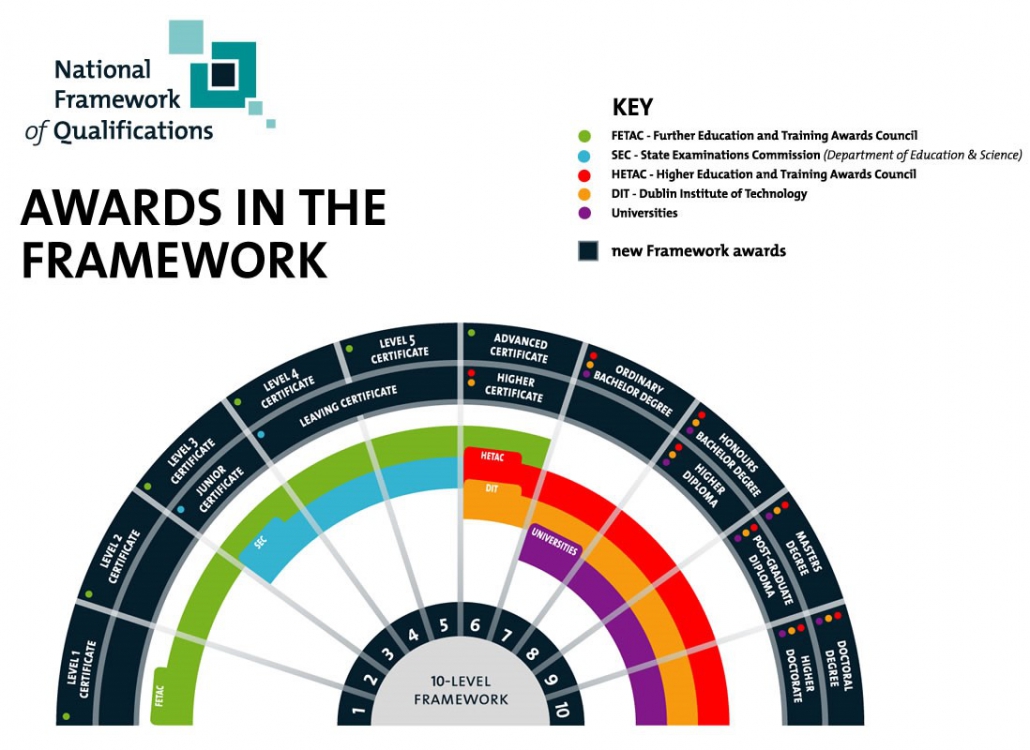
- Level 6 Higher Certificate: typically 2 years. Students may receive exemptions of 1 or 2 years when progressing to a Bachelor’s program;
- Level 8 Higher Diploma: typically 1 year;
- Level 8 Graduate Diploma: typically 1 year;
- Level 9 Postgraduate Diploma: typically 1-2 years.
Degree programs:
- Level 7 Bachelor’s Degree: typically 3 years (Programs such as Medicine, Veterinary Science, Dentistry, and Architecture usually take 5-6 years.);
- Level 8 Honours Bachelor’s Degree: typically 3-4 years;
- Level 9 Master’s Degree: typically 1-2 years (The 1-year Master’s programs are currently very popular among international students due to shorter study duration and eligibility for a 2-year post-study work visa.);
- Level 10 Doctoral Degree (PhD) or Post-Doctoral Degree: usually at least 3 years, including a dissertation.
See more about Irish universities at the link here.
For tailored guidance and full assistance throughout your study-abroad journey, please contact us HERE:
Duc Anh EduConnect
Hotline: 09887 09698, 09630 49860
Email: duhoc@ducanh.edu.vn
Website: ducanhduhoc.vn/
Các trường đại học tại Ireland
Bài viết liên quan

Du học Úc và việc ở lại làm việc 1,5- 2 năm tại Úc
Chi tiết bổ sung là: từ năm 2013, sinh viên được phép ở lai 2 năm nếu tốt nghiệp cử nhân hoặc thạc sỹ dạng lên lớp, ở lại 3 năm nếu tốt nghiệp thạc sỹ dạng nghiên cứu, ở lại 4 năm nếu tốt nghiệp tiến sỹ, khi và chỉ khi sinh viên đáp ứng được các điều kiện
Điều kiện xin học và cách xin học tại Úc
Bạn vẫn có thể xin học khi chưa đủ tiếng Anh hoặc học bạ, bằng tốt nghiệp. Chỉ cần bạn nộp những gì đã có về học tập và nói rõ với nhà trường về tình trạng của bạn, bạn sẽ được cấp thư mời học có điều kiện – và sau khi bạn đủ bảng điểm, chứng nhận tốt nghiệp, bạn có thể bổ sung để hoàn thiện thủ tục xin học.
Công ty Đức Anh và cuộc thi toàn quốc “Thắp sáng ước mơ du học”
Sự rộng khắp của cuộc thi và nội dung đầy thách thức hứa hẹn sẽ sàng lọc ra được nhiều nhân tài, cuộc thi thu hút được rất nhiều sự chú ý quan tâm của các đơn vị giáo dục trong và ngoài nước. Nổi bật là các đơn vị giáo dục hàng đầu trên thế giới hiện nay như ELS, và Trinity College thuộc ĐH Melbourne – ĐH xếp hạng 28 trên toàn thế giới.
Tuần lễ tư vấn du học – học bổng – việc làm quốc tế
Đức Anh A&T tổ chức tuần lễ tư vấn du học- học bổng và việc làm tại các nước Anh, Úc, Mỹ, New Zealand, Canada, Singapore, Thụzy Sỹ, Mã Lai, từ ngày 22/4-10/5. Học sinh nộp hồ sơ du học trong giai đoạn này được hỗ trợ 300 USD khi nhận visa du học.
Sinh viên dược tìm thấy ở Monash sự danh giá, học bổng, bề dày di sản
Một câu chuyện trong biết bao câu chuyện chưa được kể về một nét truyền thống đậm nét Monash mang tên Học bổng Mathew Peck (Mathew Peck Travelling Scholarship) giành cho sinh viên học dược.