



UNIVERSITIES IN NEW ZEALAND
Thứ Hai - 01/12/2025
- General information
Universities: New Zealand has 8 public universities offering bachelor’s, master’s, and doctoral programs, along with many polytechnics and private colleges that also provide bachelor’s and master’s degrees – mostly in business administration. New Zealand universities have campuses both in New Zealand and in various countries, or collaborate with domestic and international universities. Most New Zealand universities accept credit transfers for students progressing into bachelor’s or master’s programs. In addition to the universities listed, there are numerous colleges and education institutes licensed to deliver bachelor’s, master’s, and doctoral-level qualifications.
New Zealand’s 8 Public Universities
| No | University | QS World Ranking | Campus Locations | Programs Offered |
| 1 | University of Auckland | 65 | Auckland | Foundation, Diploma, Bachelor’s, Master’s, PhD |
| 2 | University of Otago | 214 | Dunedin, Christchurch, Wellington, Auckland | English, Foundation, Diploma, Bachelor’s, Master’s, PhD |
| 3 | University of Waikato | 235 | Hamilton, Tauranga | Foundation, Diploma, Bachelor’s, Master’s, PhD |
| 4 | Massey University | 239 | Auckland, Wellington, Palmerston North | Foundation, Bachelor’s, Master’s, PhD |
| 5 | Victoria University of Wellington | 244 | Wellington | Foundation, Bachelor’s, Master’s, PhD |
| 6 | University of Canterbury | 261 | Christchurch | Bachelor’s, Master’s, PhD |
| 7 | Lincoln University | 371 | Christchurch | English, Diploma, Bachelor’s, Master’s, PhD |
| 8 | Auckland University of Technology (AUT) | 412 | Auckland | Foundation, Diploma, Bachelor’s, Master’s, PhD |
All universities are highly ranked, known for world-class education quality, and are located in beautiful regions across New Zealand.
Training: The mission of higher education in New Zealand is to preserve knowledge, educate and transfer knowledge, create new knowledge, and provide consulting services to agencies and partners that require specialized expertise. Depending on the field of study, programs may emphasize practical training or research.
Universities typically offer a wide range of disciplines (more than 400 fields – see more program information here) and specialize in delivering bachelor’s, master’s, and PhD programs. However, some institutions also provide vocational diplomas, and a few may offer secondary education. All universities have their own English language centres to prepare international students with English skills and academic support. Most universities also offer foundation programs to help international students transition into bachelor’s studies.
Ranking: One out of eight New Zealand universities is listed among the Top 100 universities worldwide. The remaining universities are ranked within the Top 200 or Top 400 best universities globally.
Study Levels: Universities and tertiary institutes in New Zealand offer full higher-education pathways or some of the following levels:
- Bachelor’s degree: 3–7 years
- Bachelor with Honours: minimum 4 years
- Graduate Certificate: 6 months
- Graduate Diploma: 12 months
- Master’s degree by coursework: 1.5–2 years
- Master’s degree by research: 1.5–2 years
- Doctor of Philosophy (PhD): 3 years or more
Entry Requirements: While each institution may have its own detailed criteria, general requirements include: Academic performance: good to excellent, depending on the major and university
English proficiency: PTE Academic 60–64 or IELTS 6.0–6.5 Work experience for certain master’s and PhD programs.
Tuition Fees: Tuition typically ranges from NZD 18,000–35,000 per year depending on the institution. Some majors have significantly higher fees, such as Medicine: NZD 40,000–50,000 per year.
Living Costs: Students may stay in homestay, dormitories, or shared housing. Standard annual expenses are around NZD 20,000, while actual spending ranges from NZD 12,000–14,000 depending on the student. Students under 18 must stay in homestay, dormitory, or with approved relatives.
Intakes: Main intakes are in February or March for Semester 1, and July or August for Semester 2. Some universities also offer an intake in October.
Part-time Work: Students may work up to 20 hours per week during study periods and full-time during holidays. Common part-time jobs are in hospitality, hotels, and restaurants, with wages from NZD 14–17 per hour.
Post-study Work and Residency in New Zealand: Graduates of bachelor’s, master’s, and PhD programs with a program duration of at least 2 years may stay and work for 1–3 years depending on their field of study. All graduates may apply for residency if eligible, either through skilled migration pathways (see the list of priority occupations here) or through an employer-sponsored work visa leading to residency.
- NOTES FOR VIETNAMESE STUDENTS STUDYING AT NEW ZEALAND UNIVERSITIES
At the bachelor’s level, since the Vietnamese high school diploma is not fully recognized in New Zealand, Vietnamese students may choose one of the following pathways: (1) foundation studies + bachelor’s degree, (2) diploma/polytechnic + bachelor’s degree, or (3) foundation + diploma + bachelor’s degree. Please check with us for your specific case to select the most suitable pathway.
At the master’s level, most New Zealand universities do not recognize Vietnamese bachelor’s degrees directly. Vietnamese students are usually required to complete a one-year Graduate Diploma before progressing to a one-year master’s program. Please consult us for your specific case.
At the PhD level, Vietnamese students who wish to pursue a doctorate should complete a master’s degree by research first to improve their chances of admission.
Students currently studying at university or those who have completed a college program in Vietnam can transfer to New Zealand universities. Each university will review the student’s academic records to determine which credits can be transferred and how many additional courses are required for the bachelor’s degree.
The application process takes approximately 2 – 4 – 8 weeks, and visa processing also takes around 2 – 4 – 8 weeks depending on the case. Therefore, students should proactively submit their application to Đức Anh 3 – 4 months before the intended start date.
Duc Anh EduConnect Supports Students:
Duc Anh is a reputable and trusted representative of ALL schools in New Zealand. If you meet the entry requirements, we can certainly help you gain admission to any school you wish. And if the school offers scholarships and you are eligible, you will receive prioritized consideration.
For tailored guidance and full assistance throughout your study-abroad journey, please contact:
Duc Anh EduConnect
Hotline: 09887 09698
Email: duhoc@ducanh.edu.vn
Website: www.ducanhduhoc.vn
Bài viết liên quan

Arkansas Uni: Du học Mỹ- Học bổng cao, chi phí thấp, thực tập hưởng lương
Đại học Arkansas- Fort Smith (UAFS) nằm trong Top các trường đại học tốt nhất miền Nam nước Mỹ có học phí chỉ 12.000 USD/năm, học bổng 8.000- 38.452 USD/4 năm, chi phí sinh hoạt tại TP. Fort Smith thấp nhất nhì tại Mỹ cùng nhiều cơ hội thực tập hưởng lương 2.000 USD/tháng.
Hội thảo du học Anh- GSM: chất lượng cao, học bổng, ngành hot và tiết kiệm chi phí
Trường Quản lý Greenwich London (GSM) là sự lựa chọn tối ưu của nhiều bạn trẻ năng động bởi vị trí trung tâm thủ đô London, chương trình Cử nhân 2 năm giúp tiết kiệm thời gian và chi phí, ngành học HOT, dễ xin việc làm khi về Việt Nam.
Tại sao nên chọn du học Nhật Bản
Nhật Bản, cái tên không còn xa lạ để các bạn trẻ chọn lựa là điểm đến du học của mình. Với rất nhiều điểm tương đồng và gần gũi…
Hội thảo: Du học tại Đại học Macquarie – Làm việc tại Úc
Lương khởi điểm của sinh viên tốt nghiệp Đại học Macquarie luôn nằm trong Top cao nhất tại Úc trong 10 năm qua theo thống kê của The Good Universities Guide 1998-2011.
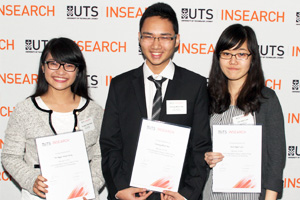
Chúc mừng các sinh viên Việt Nam có thành tích học tập xuất sắc tại UTS và UTS INSEARCH
Các sinh viên đến từ bảy đất nước khác nhau, bao gồm ba sinh viên đến từ Việt Nam đã có kết quả học tập xuất sắc và được khen…
Đại học Quốc tế Tokyo: du học Nhật bằng tiếng Anh với học bổng đến 100%
Đại học Quốc tế Tokyo (TIU) được thành lập năm 1965, là một trường đại học uy tín và có chất lượng giảng dạy tốt tại Nhật Bản. TIU là một trong số ít các trường có chương trình đào tạo bằng Tiếng Anh và nhiều học bổng 30%-50%-80%-100% cho sinh viên quốc tế.