









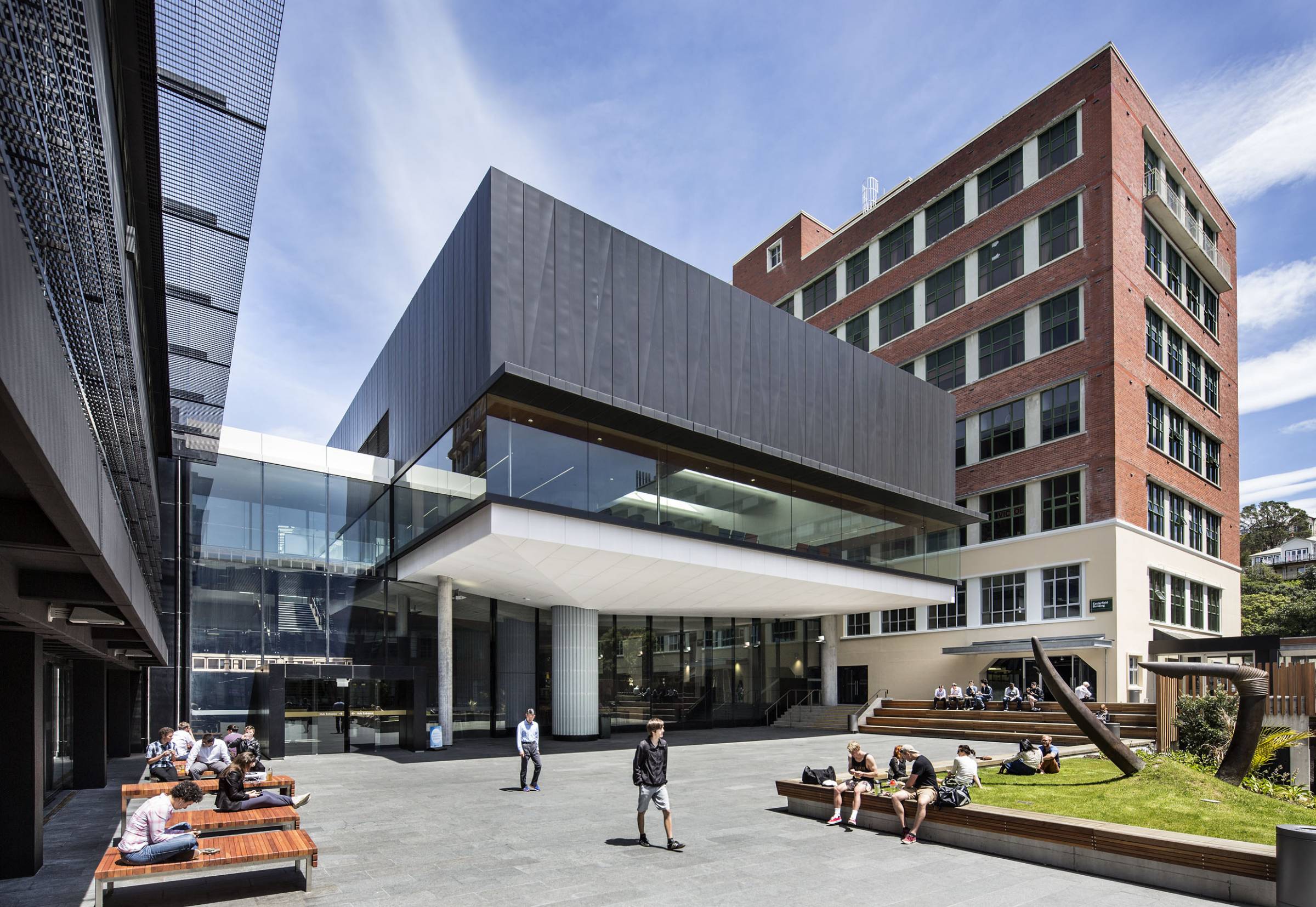
Information about Victoria University of Wellington, New Zealand
Thứ Tư - 31/12/2025
1. Parents and students are advised to check the most up-to-date information on the university’s official website: wgtn.ac.nz/
2. Location: 5 campuses
- Kelburn: 3.3 km from the city centre and 8.2 km from Wellington International Airport;
- Pipitea: 5 km from the city centre and 10 km from Wellington International Airport;
- Te Aro: 2.5 km from the city centre and 5.9 km from Wellington International Airport;
- Auckland premises: located in Auckland city centre, 28 km from Auckland International Airport;
- Miramar Creative Centre: 8 km from the city centre and 2.4 km from Wellington International Airport.
3. Type of institution: Public university
4. Rankings & Quality Accreditation:
- Ranked 240 globally (QS World University Rankings 2026);
- Ranked 4 in New Zealand (QS Rankings 2026);
- Victoria University of Wellington rankings: https://www.wgtn.ac.nz/research/strengths/performance-and-rankings
5. Total number of students: > 22,000
6. International students: > 3,000
7. Key strengths:
- Strong graduate outcomes: 95% of graduates are employed or pursue further study; 89.9% of students are satisfied with the university’s services and facilities;
- Prime location: Wellington is the political centre and cultural capital of New Zealand, with strong development in information technology, music, arts, and creative industries;
- Diverse academic programmes:
Undergraduate programmes across more than 100 majors, and over 220 postgraduate degrees and certificates. Key strengths include Social Sciences, Accounting and Finance, Earth and Ocean Sciences, Education, Engineering, Hospitality, Law, Performing Arts, and Psychology; - High-quality faculty:
Academic staff are leading experts in their fields, helping students discover and develop their talents and passions. Many lecturers have received National Tertiary Teaching Excellence Awards for innovation in education, with teaching and learning approaches aligned with international standards and global trends; - Facilities and international student support:
The university offers comprehensive support services for international students, including healthcare, disability support, accommodation assistance, financial support, academic counselling, and career guidance.
In addition, students are allowed to work part-time while studying English, can stay in New Zealand 1–3 years after graduation, and may apply for residency when eligible.
8. Academic programmes:
a. Levels of study: (see details here)
- English language programmes;
- University Foundation Programme (delivered by UP International College);
- Bachelor’s degrees;
- Postgraduate certificates and diplomas;
- Master’s degrees;
- Doctoral (PhD) programmes.
b. Faculties: www.wgtn.ac.nz/about/campuses-facilities/faculties-schools
FACULTY OF ARCHITECTURE AND DESIGN / TE WĀHANGA WAIHANGA-HOAHOA
FACULTY OF EDUCATION / TE WHĀNAU O AKO PAI
FACULTY OF HEALTH / TE WĀHANGA TĀTAI HAUORA
- School of Nursing, Midwifery, and Health Practice / Te Kura Tapuhi Hauora
- School of Health / Te Kura Tātai Hauora
FACULTY OF HUMANITIES AND SOCIAL SCIENCES / TE WĀHANGA ARONUI
- School of English, Film, Theatre, and Media Studies / Te Kura Tānga Kōrero Ingarihi, Kiriata, Whakaari, Pāpāho
- School of History, Philosophy, Political Science and International Relations / Te Kura Aro Whakamuri, Rapunga Whakaaro, Matai Tōrangapū me te Ao
- School of Languages and Cultures / Te Kura o ngā Reo me ngā Tikanga-ā-iwi
- School of Linguistics and Applied Language Studies / Te Kura Tātari Reo
- School of Social and Cultural Studies / Te Kura Mahinga Tangata
- International Institute of Modern Letters / Te Pūtahi Tuhi Auaha o Te Ao
- Art History programme
- Language Learning Centre
- Te Kawa a Māui / School of Māori Studies
- New Zealand School of Music / Te Kōkī
- Stout Research Centre for New Zealand Studies (including Museum and Heritage Studies)
FACULTY OF LAW / TE KAUHANGANUI TĀTAI TURE
WELLINGTON FACULTY OF ENGINEERING / TE WĀHANGA AHUNUI PŪKAHA
WELLINGTON FACULTY OF GRADUATE RESEARCH / TE HERE TĀURA RANGAHAU
WELLINGTON FACULTY OF SCIENCE / TE WĀHANGA PŪTAIAO
- School of Biological Sciences / Te Kura Mātauranga Koiora
- School of Chemical and Physical Sciences / Te Wānanga Matū
- School of Geography, Environment and Earth Sciences / Te Kura Tātai Aro Whenua
- School of Mathematics and Statistics / Te Kura Mātai Taturanga
- School of Psychology / Te Kura Mātai Hinengaro
- Centre for Science in Society
WELLINGTON SCHOOL OF BUSINESS AND GOVERNMENT / ORAUARIKI
- School of Accounting and Commercial Law / Te Kura Kaute, Ture Tauhokohoko
- School of Economics and Finance / Te Kura Ohaoha Pūtea
- School of Government / Te Kura Kāwanatanga
- School of Information Management / Te Kura Tiaki, Whakawhiti Kōrero
- School of Management / Te Kura Whakahaere
- School of Marketing and International Business / Te Kura Hokohoko, Pakihi ki te Ao
c. Fields of study: view details here
ARCHITECTURE AND BUILDING SCIENCE
- Architecture
- Architecture History and Theory
- Interior Architecture
- Landscape Architecture
- Project Management
- Sustainable Engineering Systems
DESIGN
- Animation and Visual Effects
- Communication Design
- Design for Social Innovation
- Fashion Design Technology
- Industrial Design
- Interaction Design
- Media Design
EDUCATION AND TEACHING
- Education
- Language Teaching
- Teacher Education
BUSINESS
- Accounting, Taxation, and Commercial Law
- Actuarial Science
- Economics and Finance
- Human Resource Management and Industrial Relations
- Information Systems
- Management
- Marketing and International Business
- Tourism Management
COMMUNICATION
- Intercultural Communication
- Literary and Creative Communication
- Media Studies
- Political Communication
- Science Communication
ENGINEERING AND DIGITAL TECHNOLOGIES
- Computer Graphics
- Cybersecurity
- Electronics and Computer Systems
- Networking and Security
- Software and Computer Science
ENGLISH LITERATURE AND CREATIVE WRITING
- Creative Writing
- English Literature
ENVIRONMENTAL SCIENCES
- Ecology and Biodiversity
- Environmental Science
- Environmental Studies
- Marine Biology
FILM, MEDIA, ANDTHEATRE
- Film
- Media Studies
- Theatre
HEALTH
- Biomedical Science
- Health Informatics
- Health Promotion
- Health Psychology
- Health Software Development
- Population Health, Policy, and Service Delivery
HISTORY AND PHILOSOPHY
- Art History
- Classics
- History
- Philosophy
LANGUAGES AND LINGUISTICS
- Asian Languages and Cultures
- English Proficiency
- European Languages and Cultures
- Linguistics
- New Zealand Sign Language
- Pacific Cultures and Languages
- Te Reo Māori
LAW
- Law
MATHEMATICS AND STATISTICS
- Actuarial Science
- Data Science
- Mathematics
- Statistics
MUSIC
- Classical Performance
- Instrumental/Vocal Composition
- Jazz Performance
- Music Studies
- Sonic Arts and Music Technology
POLITICS AND PUBLIC POLICY
- Politics and International Relations
- Public Policy and Government
PSYCHOLOGY
- Educational Psychology
- Health Psychology
- Psychology
SCIENCE
- Biological Sciences
- Biomedical Sciences
- Chemistry
- Development Studies
- Earth Sciences
- Geography
- Physics
- Renewable Energy Systems
- Science in Society
SOCIAL SCIENCES
- Anthropology
- Criminology
- Development Studies
- Geography
- Māori Resource Management
- Māori Studies
- Religious Studies
- Sociology
9. Study pathways for Vietnamese students:
- After completing Grade 11: Students may choose to study University Foundation Programme + Bachelor’s degree (from Year 1).
- After completing Grade 12: Students may choose:
- University Foundation Programme + Bachelor’s degree (from Year 1);
- Direct entry into Bachelor’s degree (from Year 1).
- After completing a Bachelor’s degree: Students may choose:
- Pre-Master’s Programme + Master’s degree (from Year 1);
- Direct entry into Master’s or PhD programmes.
- After completing a Master’s degree: Students may progress to a PhD programme.
10. Entry requirements: see details here
- English language programmes: IELTS 4.5 or TOEFL 32;
- University Foundation Programme: High school graduation; IELTS 5.5 / TOEFL 500; GPA ≥ 7.0;
- Bachelor’s degree: High school graduation (all Vietnamese high schools are recognised); IELTS 6.0 / TOEFL 550; Completion of Year 1 at a recognised university with good academic results;
- Master’s degree: Bachelor’s degree with good academic results; IELTS 6.5 / TOEFL 575; A detailed research proposal is required;
- Doctoral (PhD) degree: Master’s degree; IELTS 6.5 / TOEFL 575; A detailed research proposal is required.
11. Intakes: February, July and November each year.
12. Application documents:
General documents:
- Highest qualification certificate;
- Academic transcripts of the most recent two years;
- English language certificate (if available);
- Passport (photo and signature page) – if available;
- Academic achievements and extracurricular records (for scholarship consideration).
Additional requirements for Master’s programmes:
- CV;
- Two Letters of Recommendation.
Additional requirements for PhD / research-based Master’s programmes:
- Research proposal;
- Published academic papers (if any).
13. Tuition fees: see details here
- Pathways Link Programme: NZD 32,000/year;
- University Foundation Programme: NZD 16,750 – 31,250 per programme;
- Bachelor’s degree: NZD 31,711 – 41,734 per year;
- Master’s degree: NZD 34,011 – 45,274 per year.
14. Living expenses: Approximately NZD 16,000 – 20,000 per year.
15. Scholarships: NZD 5,000 – 10,000. See details here.
16. Accommodation and other services: Students may choose homestay, on-campus residence, shared accommodation (if over 18 years old), or stay with relatives. Accommodation options include:
- Halls of residence;
- Private accommodation;
- Homestay accommodation.
17. Support from Duc Anh EduConnect:
Duc Anh is one of the few officially authorised representatives in Vietnam providing comprehensive support for international students, including:
- Consulting on school and programme selection – students are only referred to institutions with high academic quality;
- Application submission and maximising scholarship opportunities (subject to eligibility);
- English training and official PTE Academic test organisation (ducanh.edu.vn/) as an alternative to IELTS/TOEFL for faster and more flexible study abroad preparation;
- Student visa application and continuous support throughout the study period;
- Career consultation for global employment opportunities, especially in Australia, the USA, Canada and the UK (subject to new policy drafts);
- Accommodation arrangements suitable for students;
- Advice on part-time work up to 20 hours/week while studying;
- Guidance on post-study work opportunities (1–3 years);
- Information and consultation on permanent residency pathways when students become eligible.
For details on events, application procedures, scholarships, student visas and related matters, please contact us directly.
Duc Anh EduConnect
Hotline: 09887 09698
Email: duhoc@ducanh.edu.vn
Website: www.ducanhduhoc.vn
Bài viết liên quan

TRƯỜNG CAO ĐẲNG QUỐC TẾ LA TROBE MELBOURNE
Là trường đào tạo các chương trình liên thông lên đại học La Trobe- một trong những trường đại học có chất lượng tốt tại Úc với chi phí đào tạo hợp lý. Có chương trình học rút gọn (fastrack) giúp sinh viên rút ngắn thời gian đào tạo, có thêm cơ hội tìm việc làm sau khi tốt nghiệp và tiết kiệm sinh hoạt phí (Qua chương trình Cao đẳng tại trường, sinh viên có thể hoàn thành chương trình Cử nhân trong vòng 2 năm 8 tháng, thay vì 3 năm
Kỳ 4: Những Luật sư nổi tiếng có thu nhập “khủng”
Nói đến thu nhập, nghề luật sư luôn là nghề có thu nhập dẫn đầu ở các nước phát triển như Mỹ và châu Âu. Theo thống kê trong năm 2012 của Tạp chí Fortune, trong số 25 tập đoàn trả lương cho nhân viên cao nhất toàn cầu thì có đến 3 công ty luật ở vị trí dẫn đầu, bao gồm: Baker Donelson, Bingham McCutchen, Alston & Bird, Perkins Coie. Trong đó, Baker Donelson đứng thứ 2 toàn cầu về việc trả lương cao nhất cho nhân viên của mình với mức lương trung bình 228.851 USD/năm (tương đương 4,8 tỷ đồng).
GẶP GỠ ĐẠI DIỆN TRƯỜNG ĐẠI HỌC NEWCASTLE, ANH QUỐC
Nằm trong top 20 trường đại học xuất sắc nhất Vương Quốc Anh, Đại học Newcastle là một học viện giảng dạy và nghiên cứu lớn nhất vùng Đông bắc nước Anh
Học cao đẳng nghề và làm việc tại Úc, Canada, New Zealand, Anh.
Các trường nghề đào tạo học sinh theo nhu cầu thực tế của thị trường lao động, không phải là chuẩn bị lực lượng lao động cho vài năm tới, 5 năm 10 năm cho tương lai…mà là để dùng ngay, đáp ứng ngay nhu cầu của thị trường lao động. Vì vậy đương nhiên khi ra trường, các bạn đã có lợi thế của VIỆC TÌM NGƯỜI hơn hẳn so với các bạn học đại học.
Hệ thống giáo dục Mỹ- so với hệ thống giáo dục Việt Nam (Kỳ 2)
Tại Mỹ, hệ thống các trường học bắt đầu từ mẫu giáo, lên tiểu học, trung học và giáo dục sau phổ thông, bao gồm học nghề, cao đẳng, đại học và sau đại học- tương đối tương đồng với hệ thống giáo dục tại Việt Nam.. Du học sinh tương lai cần biết mình cần học gì để xác định mình sẽ bắt đầu từ đâu.?
Hệ thống giáo dục Mỹ- so với hệ thống giáo dục Việt Nam
Tại Mỹ, hệ thống các trường học bắt đầu từ mẫu giáo, lên tiểu học, trung học và giáo dục sau phổ thông, bao gồm học nghề, cao đẳng, đại học và sau đại học- tương đối tương đồng với hệ thống giáo dục tại Việt Nam.. Du học sinh tương lai cần biết mình cần học gì để xác định mình sẽ bắt đầu từ đâu.?