









UNIVERSITY OF NEW SOUTH WALES, AUSTRALIA
Thứ Ba - 30/12/2025
1. Parents and students are advised to check the latest updated information on the official university websites:
2. Campuses & Locations
UNSW has 4 campuses:
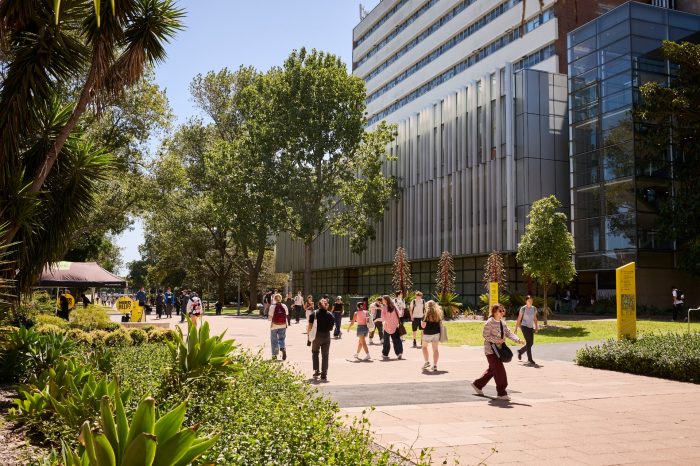
- Kensington campus – Main UNSW campus: 36MJ+3G Kensington, New South Wales, Australia. Approximately 13 minutes’ drive to Sydney CBD and 20 minutes’ drive to Sydney International Airport;
- Paddington campus – Art & Design campus: Oxford Street & Greens Road, Paddington NSW 2021. Approximately 7 minutes’ drive to Sydney CBD and 19 minutes’ drive to Sydney International Airport;
- Cliffbrock Campus: 45 Beach Street, Coogee NSW 2034. Approximately 6 minutes’ walk to Gordon Bay and 26 minutes’ drive to Sydney Airport;
- UNSW Canberra Campus: ADFA, Northcott Drive, Canberra ACT 2600. Approximately 8 km to Canberra city centre and 10 minutes’ drive to Canberra International Airport.
3. Institution Type: Public University
4. Rankings & Accreditation:
- Ranked #20 worldwide (QS World University Rankings 2026);
- Ranked #6 in Australia (Times Higher Education – THE 2025);
- UNSW Rankings: https://www.unsw.edu.au/newsroom/news/2025/06/unsw-sydney-maintains-top-20-spot-in-qs-world-university-rankings
5. Total Student Population: Over 62,509 students
6. International Students: Over 23,148 international students
7. Key Strengths:
- Member of Group of Eight (Go8), Universitas 21, Global Alliance of Technological Universities, Association of Pacific Rim Universities, and the PLuS Alliance;
- Ranked #19 among the world’s leading universities (QS World University Rankings 2025);
- Ranked #29 worldwide for graduate employability;
- Ranked #1 in Australia for startup founders;
- Ranked #27 worldwide for graduate outcomes/successful employment applications (QS Graduate Employability Rankings 2020);
- Strong and consistently high-ranked research performance;
- Welcomes international students from 120+ countries;
- 5 subjects in the Top 20 worldwide: Mineral & Mining Engineering (#3), Civil & Structural Engineering (#13), Law (#14), Petroleum Engineering (#17), Accounting & Finance (#20);
- Awarded QS Five Stars Plus, achieving the maximum rating across areas such as teaching and research;
- UNSW’s AGSM MBA ranked in the Top 75 worldwide;
- Ranked #1 in Australia and #24 worldwide for producing millionaire alumni (WealthInsight & Elite Traveler magazine).
8. Academic Programs
a. Levels of Study: See details here
- English Programs
- University Foundation
- Diploma (4 programs):
- Diploma in Business
- Diploma in Computer Science
- Diploma in Engineering
- Diploma in Science
- Bachelor’s
- Master’s
- Doctoral (PhD)
b. Faculties: www.unsw.edu.au/faculties
UNSW has 8 faculties:
- Arts & Design
- Built Environment
- Engineering
- Medicine & Health
- Arts, Design & Social Sciences
- Business
- Law
- Science
c. Fields of Study: See details here
A – C:
- Architectural Studies
- Actuarial Studies
- Arts
- Arts/ Education (Secondary)
- Arts and Business
- Advanced Science (Honours)
- Advanced Science (Honours)/Engineering (Honours)
- Advanced Science (Honours)/Science (Computer Science)
- Aviation (Flying)
- Aviation (Management)
- Biotechnology (Hons)
- Commerce
- Commerce (International)
- Commerce/Computer Science
- City Planning (Hons)
- Computational Design
- Construction Management and Property
- Commerce/Media (PR and Advertising)
- Commerce / Education (Secondary)
- Criminology and Criminal Justice
D – F
- Design
- Design / Education (Secondary)
- Economics
- Engineering (Honours) (Aerospace Engineering)
- Engineering (Honours) (Mechanical and Manufacturing Engineering)
- Engineering (Honours) (Mechanical Engineering)
- Engineering (Honours) (Mechatronic)
- Engineering (Honours) (Mining)
- Engineering (Honours) (Petroleum)
- Engineering (Honours) (Photovoltaics and Solar Energy)
- Engineering (Honours) (Renewable Energy)
- Engineering (Honours) (Chemical Product Engineering)
- Engineering (Honours) (Chemical)
- Engineering (Honours) (Bioinformatics)
- Engineering (Honours) (Computer)
- Engineering (Honours) (Software)
- Engineering (Honours)/Science (Computer Science)
- Engineering (Honours) (Electrical)
- Engineering (Honours) (Telecommunications)
- Engineering (Civil Engineering with Architecture) (Honours)
- Engineering (Honours) (Civil)
- Engineering (Honours) (Civil)/Surveying
- Engineering (Honours) (Environmental)
- Engineering (Honours)/Engineering Science
- Electrical Engineering and Telecommunications
- Engineering (Honours)
- Engineering (Materials Science) (Honours)
- Engineering (Honours) in Materials Science and Engineering
- Exercise Physiology
- Environmental Management
- Fine Arts (Studio Practice)
- Fine Arts / Education (Secondary)
- Fine Arts (Art Theory)
- Food Science (Honours)
I – S:
- Information Systems
- International Studies
- Interior Architecture (Hons)
- Industrial Design (Hons)
- International Public Health
- Landscape Architecture (Hons)
- Life Sciences
- Medical Studies
- Media (Communication and Journalism)
- Media (Public Relations and Advertising)/Arts
- Media (Screen and Sound Production)
- Media (Screen and Sound Production)/Arts
- Music
- Media Arts
- Media Arts (Honours) / Education (Secondary)
- Medicinal Chemistry (Hons)
- Music / Bachelor of Education (Secondary)
- Psychological Science
- Psychology (Honours)
- Science (Honours)
- Science (International)
- Science (Computer Science)
- Science (Advanced Mathematics)(Honours)
- Science / Education (Secondary)
- Social Research and Policy
- Social Work (Honours)
9. Entry Requirements: See detailed requirements here
- English Programs: Placement based on entry level;
- Foundation: GPA (Grade 11-12): 6.0-8.0 (depending on the program), IELTS 5.0-6.0 (depending on the program);
- Diploma: GPA 8.0, IELTS 6.0 (Writing 6.0; no band below 5.5);
- Bachelor’s: High school graduation with Grade 12 GPA above 8.5 (see the list of recognized Vietnamese high schools here), or Completion of the first year of university, or Completion of a Diploma program at a recognized institution; IELTS 6.5-7.0 (depending on the program);
- Master’s: Bachelor’s degree, IELTS 6.5-7.0 (depending on the program);
- Doctoral (PhD): Honours Bachelor’s degree, or completion of a UNSW Research Master’s program, IELTS 6.5-7.0 (depending on the discipline).
10. Intake Periods
- English Programs: Monthly intakes;
- Foundation: February, March, April, June, July, September, October, November;
- Diploma: January, August;
- Bachelor’s: February, June, September;
- Postgraduate: February, June, July, September.
11. Application Documents
General Documents:
- Highest academic qualification certificate;
- Academic transcripts of the most recent 2 years;
- English language certificate (if available);
- Passport (photo and signature pages – if available);
- Academic achievements and extracurricular activities (especially for scholarship applicants).
Additional Documents for Master’s:
- Curriculum Vitae (CV);
- Two (02) Letters of Recommendation.
Additional Documents for PhD / Research Master’s:
- Research proposal;
- Published academic papers (if any).
12. Tuition Fees
Details: www.student.unsw.edu.au/fees/international
- English Programs: AUD 2,300 – 11,300
- Foundation: AUD 39,500 – 50,400 per program
- Diploma: AUD 40,710 – 45,030 per program
- Bachelor’s & Postgraduate: AUD 880 – 1,140 per credit point, average 48 credit points per year
13. Scholarships
Details: www.scholarships.unsw.edu.au/
- International Student Award: 15% tuition fee scholarship for the full duration of study, applicable to Diploma / Bachelor’s / coursework Master’s programs commencing in 2024;
- International Scientia Coursework Scholarship: AUD 20,000 per year (tuition fee), applicable to Bachelor’s or coursework Master’s programs (excluding Online Postgraduate programs and UNSW Canberra programs). Selection is based on academic excellence, leadership, extracurricular activities, and reasons for choosing UNSW;
- Australia’s Global University Award: AUD 10,000 for 1 academic year, applicable to Bachelor’s or coursework Master’s programs (excluding Online Postgraduate programs and UNSW Canberra programs). Selection is based on academic performance; no separate scholarship application is required;
- AUD 10,000 for 1 academic year: Applicable to UNSW College University Foundation programs.
14. Living Expenses: See details here
- Shared house: AUD 476.50 per week
- Private room: AUD 701.50 per week
- On-campus accommodation (college): AUD 445 per week
15. Accommodation & Other Student Services: See details here
Students may choose:
- Homestay
- On-campus accommodation
- Shared housing (for students aged 18+)
- Living with relatives
16. Support from Duc Anh EduConnect
As one of the few authorized representatives of The University of New South Wales College in Vietnam, we:
- Eliminate all concerns related to documents, applications, and procedures
- NO administrative fees, NO service fees, NO translation fees, plus a USD 200 gift voucher (terms and conditions apply)
- Provide the best options for universities, programs, and scholarships
- As a TOP PERFORMING AGENT, we guarantee professional and effective services
- Maintain one of the highest visa success rates in Vietnam
- Support students throughout their entire journey of studying and working abroad
99.9% of alumni are satisfied with the services of DUC ANH EduConnect.
For tailored guidance and full assistance throughout your study-abroad journey, please contact us HERE:
Duc Anh EduConnect
Hotline: 09887 09698, 09630 49860
Email: duhoc@ducanh.edu.vn
Website: ducanhduhoc.vn/
Bài viết liên quan

Chương trình đào tạo tại Đại học Macquarie
1. Bậc học: Tiếng Anh; Dự bị đại học; Cao đẳng; Cử nhân; Thạc sỹ; Tiến sỹ. 2. Ngành học: Hơn 400 ngành học Kinh doanh & kinh tế: kế toán;…
“Chat” với cô nữ sinh trường Ams được Havard nhận học
Lã Hồ Thị Minh Khuê, học sinh lớp 12 Toán 1 trường THPT chuyên Hà Nội – Amsterdam được trường đại học Harvard – Một trong những trường đại học danh tiếng bậc nhất nước Mỹ nhận vào học đã khiến cho rất nhiều thầy cô và học sinh trường THPT chuyên Hà Nội – Amsterdam ngưỡng mộ và tự hào.
Hành trình quay lại giảng đường
Nhiều người vẫn hỏi vì sao ngày trước tôi quyết định đi du học. Tôi thường cười cười, trả lời nửa đùa nửa thật rằng “muốn đi thì đi thôi”.
Lịch thi SLEP cho chương trình học bổng Giao lưu văn hóa Mỹ
Chính phủ Mỹ khuyến khích hoạt động này và sẵn lòng trao tặng cho học sinh toàn cầu từ khắp nơi cơ hội đến Mỹ học tập qua ISE. Khi đạt được suất đi GLVH này, bạn được miễn phí 100% tiền học và chi phí ăn ở. Tức là chi phí của bạn vô cùng thấp – trong khi tỷ lệ xin visa rất cao.
Du học Singapore: nhanh, tiện, rẻ và hiệu quả
Rất nhiều phụ huynh và học sinh chọn Singapore như điểm đến du học do gần, an toàn, chất lượng đào tạo cao, cơ hội học tập và làm việc quốc tế, kèm các chương trình hộc bổng hấp dẫn. Đức Anh miễn hoàn toàn phí hành chính du học ho học sinh và tặng 01 vé đến Singapore khi cac em đăng ký du học trước ngày 30/3/2014, cho các khóa học trong năm 2014.
Nhìn lại khoảnh khắc đón năm mới của DHS Việt
Trong lời chúc mừng năm mới dưới màn pháo hoa rực sáng khắp thế giới vào thời khắc chuyển giao sang 2014, có những tiếng nói, nụ cười của các du học sinh Việt.