









IRELAND’S EDUCATION SYSTEM
Thứ Ba - 16/12/2025
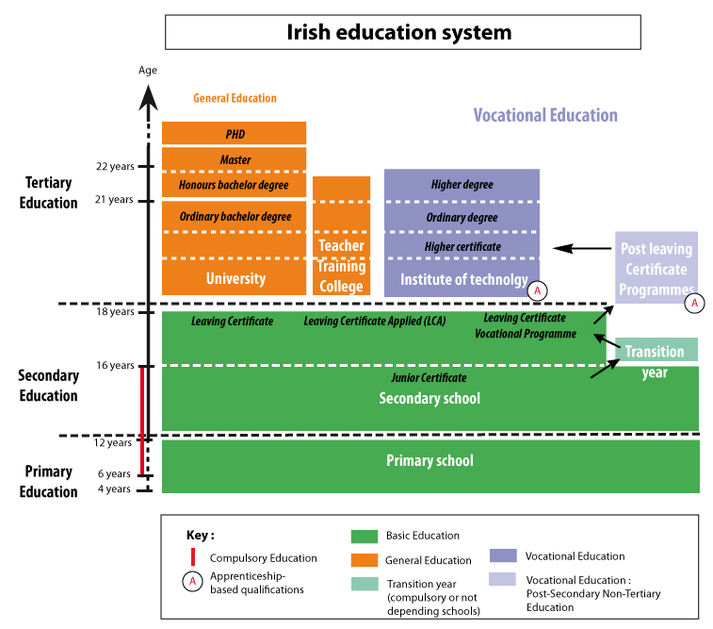
Education is compulsory for children in Ireland from ages 6 to 16, or until they have completed 3 years of secondary education. Ireland’s school system differs significantly from that of Vietnam and is divided into two main levels: Primary and Secondary.
I. Primary & Secondary Education
1. Early Childhood Education
Early childhood education (ages 4-6) is not compulsory in Ireland. However, around 40% of children aged 4-5 attend this level.
2. Primary Education
Primary education (ages 6-12) runs from 1st to 6th class. There are more than 3,000 primary schools, including:
- Government-funded schools;
- Special schools for children with disabilities;
- Private schools;
- Catholic schools.
Most local families choose government-funded schools. However, there are still a number of schools in Ireland that accept international students at this age.
3. Secondary Education
Secondary school in Ireland begins at age 12 or 13 and consists of two cycles:
- Junior Cycle – 3 years (ages 12-15);
- Senior Cycle – 2-3 years (ages 15-18): includes an optional Transition Year (TY). During TY, students do not sit formal state exams and may participate in various experiential learning opportunities, including work placements.
There are two major examinations Irish students must take during secondary education:
- Junior Certificate (Junior Cert) – taken at the end of the 3rd year (age 14-15). Results are issued at the beginning of 4th year (for students who choose to sit the exam that year), or students may sit the exam in 5th year (age 16-17);
- Leaving Certificate (Leaving Cert) – taken at the end of 6th year. Students must achieve a minimum number of points to qualify for admission to their chosen university programs.
Grading System in Ireland:
| Irish Grade | Numeric Range |
| H1 | 90-100 |
| H2 | 80-89 |
| H3 | 70-79 |
| H4 | 60-69 |
| H5 | 50-59 |
| H6 | 40-49 |
| H7 | 30-39 |
| H8 | 0-29 |
For more detailed information on secondary education in Ireland, click here.
II. Higher Education (Third-level Education)
With 32 higher education institutions, Ireland offers more than 5,000 academic programs across a wide range of fields, with qualifications that are fully assured and globally recognized. Whether you aim to study at a university strong in business administration, science and technology, or the arts and humanities, you will find excellent options in Ireland.
Programs are continuously updated and designed to combine academic theory with applied skills and essential soft skills such as independent analytical thinking, creativity, teamwork, and strong academic support from lecturers and staff. As a result, graduates from Ireland have become innovators and leaders in their fields. “The most important reason we come to Ireland is because of the skill and capability of the workforce,” said Sheryl Sandberg, Chief Operating Officer of Facebook.
1. Academic intakes: September & January
- Semester 1: September – December;
- Winter break (1 month): December – January;
- Semester 2: Late January – May;
- Summer break: May – early September.
2. Types of academic programs
Non-degree programs:
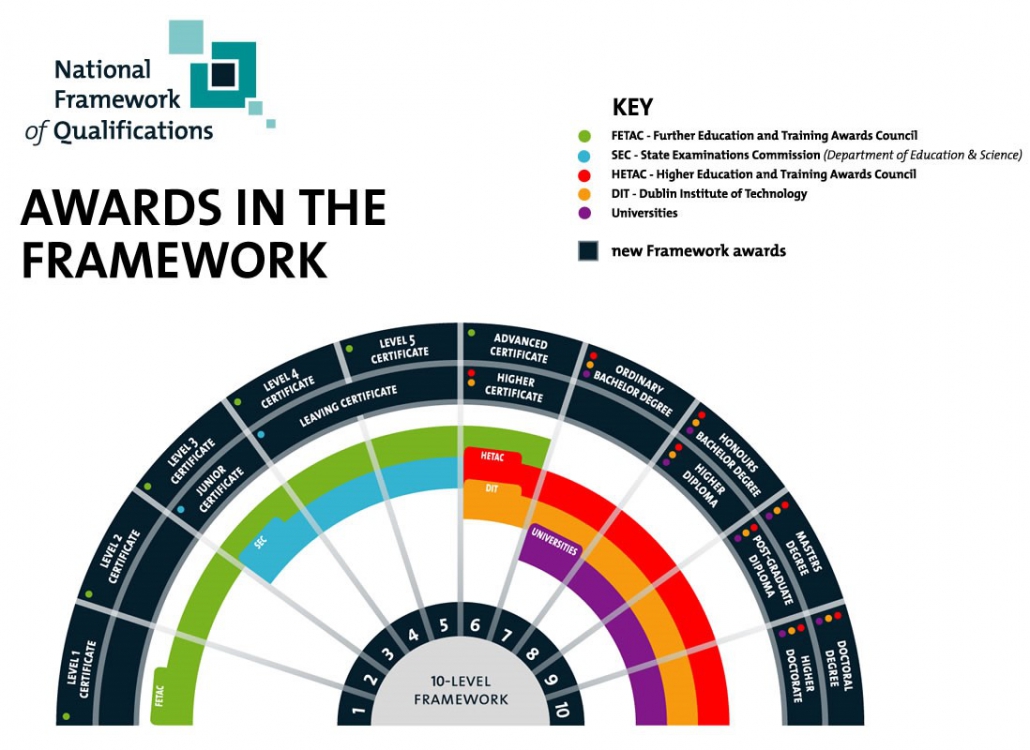
- Level 6 Higher Certificate: typically 2 years. Students may receive exemptions of 1 or 2 years when progressing to a Bachelor’s program;
- Level 8 Higher Diploma: typically 1 year;
- Level 8 Graduate Diploma: typically 1 year;
- Level 9 Postgraduate Diploma: typically 1-2 years.
Degree programs:
- Level 7 Bachelor’s Degree: typically 3 years (Programs such as Medicine, Veterinary Science, Dentistry, and Architecture usually take 5-6 years.);
- Level 8 Honours Bachelor’s Degree: typically 3-4 years;
- Level 9 Master’s Degree: typically 1-2 years (The 1-year Master’s programs are currently very popular among international students due to shorter study duration and eligibility for a 2-year post-study work visa.);
- Level 10 Doctoral Degree (PhD) or Post-Doctoral Degree: usually at least 3 years, including a dissertation.
See more about Irish universities at the link here.
For tailored guidance and full assistance throughout your study-abroad journey, please contact us HERE:
Duc Anh EduConnect
Hotline: 09887 09698, 09630 49860
Email: duhoc@ducanh.edu.vn
Website: ducanhduhoc.vn/
Bài viết liên quan

Nhóm trường Đại học khu vực ưu tiên tại Úc – Lợi ích cho du học sinh (Kì 1)
Giao thông đến các trường Đại học Vùng vô cùng thuận lợi: Bạn có thể sử dụng phương tiện công cộng hay thuê một chiếc xe ôtô tự lái một cách dễ dàng mà không phải lo ngại tắc đường. Các bạn sẽ cảm thấy vô cùng thư giãn và an toàn khi đi trên những con đường này, thậm chí cả ban đêm. Hệ thống xe bus công cộng có bến đỗ ngay tại cổng trường.
Tiếng Anh- Du học – cầu nối văn hóa Đông- Tây?
Mỗi lần trao đổi với thầy Jim, tôi thấy giống như nói chuyện với một người anh trai. Uyên bác nhưng gần gũi. Dường như giữa tôi với thầy không bao giờ hết chuyện; đặc biệt là chuyện văn hóa, chuyện du học và trải nghiệm ở nước ngoài.
Kỹ sư cơ khí: Chia sẻ của du học sinh trường Monash
Mình tên là Phan Hoàng Văn, hiện đang là sinh viên ngành Kỹ Sư Cơ Khí ở trường Đại Học Monash. Mình đã từng là học sinh lớp chuyên Vật Lý ở cấp III trường Trung học Phổ thông Chuyên Trần Đại Nghĩa, TP. HCM.
Đại học Monash: Vai trò lãnh đạo của các trường đại học Việt Nam và vấn đề phát triển bền vững
Viện phát triển bền vững MSI của trường Đại học Monash vừa tổ chức chương trình hợp tác với 20 nhà lãnh đạo từ các trường đại học hàng đầu của Việt Nam và các nước trong khu vực nhằm nâng cao các kỹ năng nghiên cứu đáp ứng với vấn đề biến đổi khí hậu hiện nay.
Thông tin về khoa cơ khí Đại học Monash
Từ ‘kỹ sư’ theo nghĩa đen có nghĩa là ‘làm cho mọi việc xảy ra”. Kỹ sư chuyển đổi kiến thức khoa học thành công nghệ, và sau đó đưa công nghệ vào đổi mới. Trong một thế giới luôn thay đổi như hiện tại và tương lai, chúng ta cần thêm nhiều kỹ sư hơn bao giờ hết – kỹ sư có khả năng giải quyết những thách thức lớn của xã hội.
Insearch: UTS – học bổng nhân kỷ niệm 40 năm quan hệ Việt Úc
Học bổng có giá trị cho các bạn sinh viên nhập học ở các khóa học chính ở UTS: Insearch – khóa dự bị Đại học UTS và/hoặc khóa Cao đẳng. Mặc dù học bổng có hiệu lực cho các sinh viên mới là Việt Nam, cho các bạn đang hoặc sắp có visa sinh viên; học bổng chỉ áp dụng cho sinh viên nào sẽ bắt đầu học khóa chính vào kỳ học 3, năm 2013 hoặc trong ba học kỳ năm 2014.